
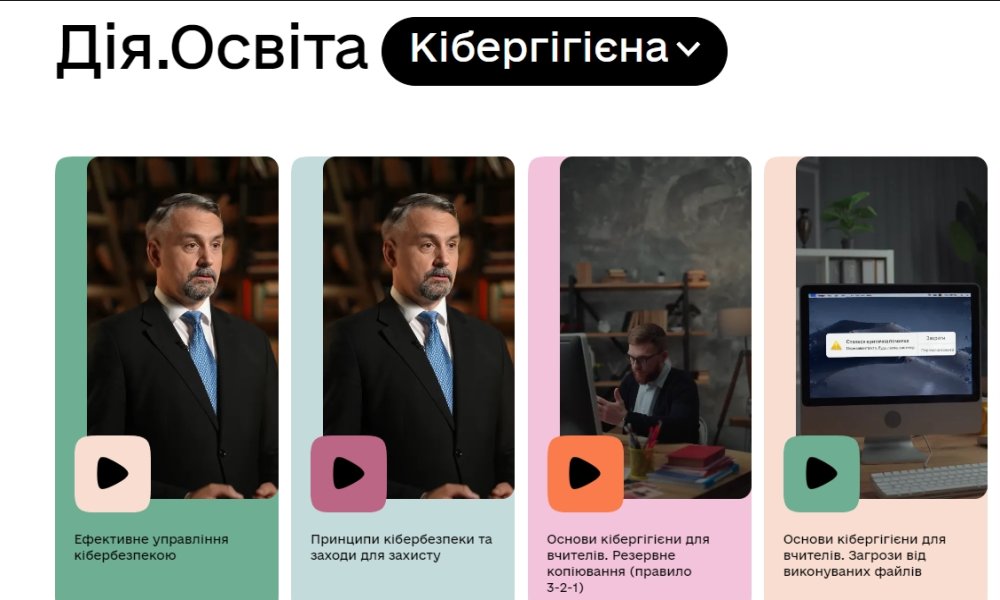
 New cyber hygiene guides have been published on the “Diia.Osvita” platform, created by the State Service of Special Communications and Information Protection of Ukraine (SSSCIP) in cooperation with BRDO. Their goal is to help government institutions, businesses, communities, and citizens assess their level of cybersecurity and strengthen data protection.
The presentation took place during Cybersecurity Month, aimed at improving digital literacy and raising awareness about online threats.
According to CERT-UA, more than 3,000 cyberattacks were recorded in Ukraine in 2025 — a 17% increase compared to the previous year. About 15 incidents occur every day. Experts emphasize that most attacks can be prevented by using two-factor authentication, software updates, and data backups, which reduce risks by nearly 98%.
The materials include guidelines, checklists, policy templates, and case studies from companies that have reduced the number of attacks by 80–90%. The guides will be useful for:
- Government institutions — to develop security policies;
- Businesses — to protect finances and data;
- Communities and citizens — to enhance digital security skills.
A Draft National Cyber Hygiene Standard, aligned with ISO 27001, NIS2, and NIST international frameworks, has also been published.
You can view the guides at the provided link.